



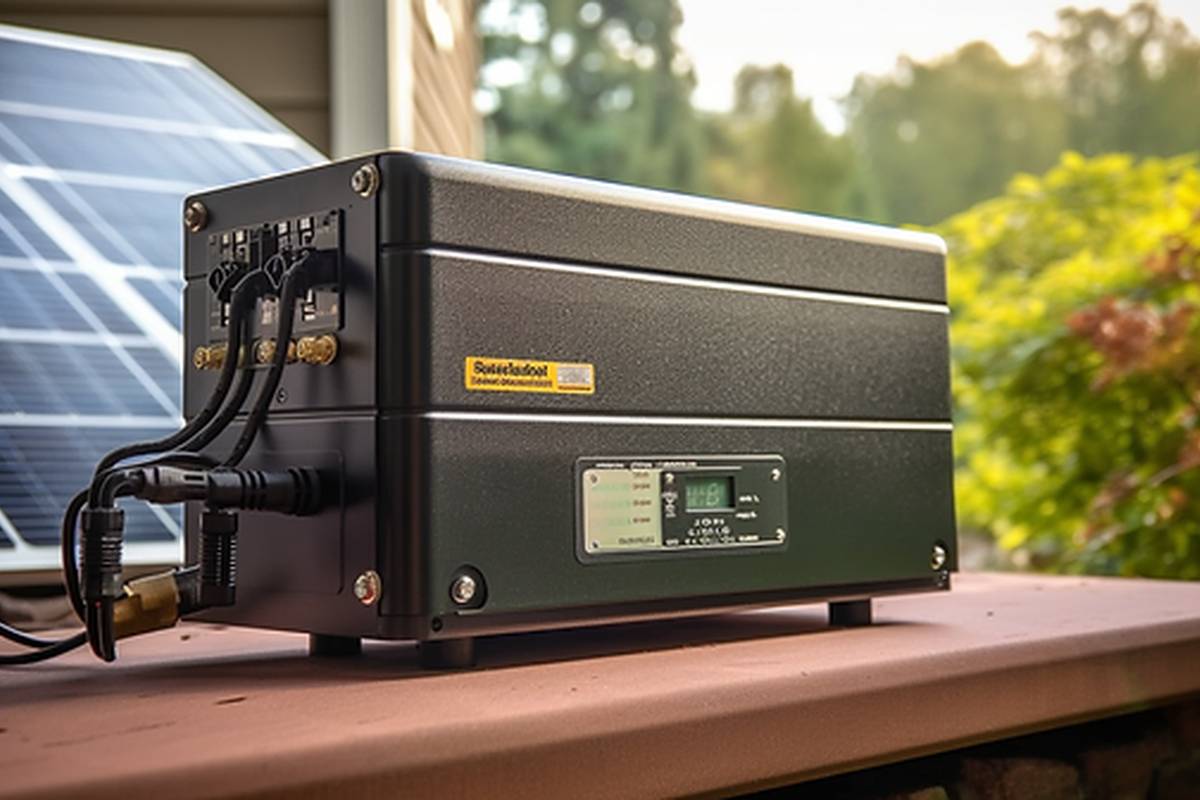

Micro Inverters
Traditionally in a solar power system, a relatively large number of solar panels or modules will be connected to an inverter producing an AC current at "mains" or "grid" voltage. That inverter, together with producing the AC current from the DC current produced by the modules, also has control over the efficiency of the modules. An mppt inverter can do this efficiently but only if all the modules have exactly the same characteristics and are operating under the same conditions.
Micro Inverters are much smaller inverters designed to match to a single panel or module. There are a number of possible benefits.
- Greater reliability. As a system will have a larger number of small inverters, an inverter can go down with the only loss of power output being that from one panel.
- Greater potential efficiency. As each micro inverter is of mppt design, they can match the output of the individule solar module to a high degree of accuracy, coping with differences between modules, whether due to aging, shade, temperature, or cleanliness. This is achieved without the need for by-pass diodes.
- Better monitoring data. Each micro inverter is capable of producing useful information from each solar module, enabling monitoring of module condition, cleanliness etc.
- Greater design flexibility. Wiring design is simpler, wiring is cheaper (as lower currents are involved), expansion of the system is simpler.
- The total cost of the inverters tends to be higher than using a centralised inverter.
And on the negative side:
This is relatively new technology and only a small number of manufacturers are following this path but production and market share is increasing.