In it's simplest form, all that is required for a solar power system is a panel to
collect the sun's energy and a battery to store that energy. When the sun is shining, the panel
will produce a voltage higher than that of the battery, causing the battery to be charged.
Most panels will include a blocking diode (an electrical component that will only alow electicity
to pass in one direction) ensuring that the battery does not discharge through the panel when
the sun is not shining.
A connection can be taken from the battery to provide a low voltage direct current for use.
This system could be used to power a small piece of equipment in a location where there is no
power.
There is however need for imrovement. With the above setup, if more power is being produced
than is used, the battery will be charged to a voltage that is high enough to damage the battery.
Also, if more power is being used than is being generated, the battery voltage will drop to a level
where again, damage reducing the life of the battery will caused.
This system needs refining by the addition of a charge controller as shown in the circuit below.
The charge controller simply connects between the panel and the battery where it monitors and controls
the current flow.
In it's simplest form, the charge controller will stop the current flow from the panel if the
battery voltage excedes a preset level.
Most controllers will also have a connection from which current may be drawn for lighting or powering
equipment. This current flow will be stopped by the controller if the battery voltage drops
below a preset level.
In many cases however, the power requirement is for a supply that is similar to "mains" electricity
ie, 120 or 230 volts AC (alternating current).
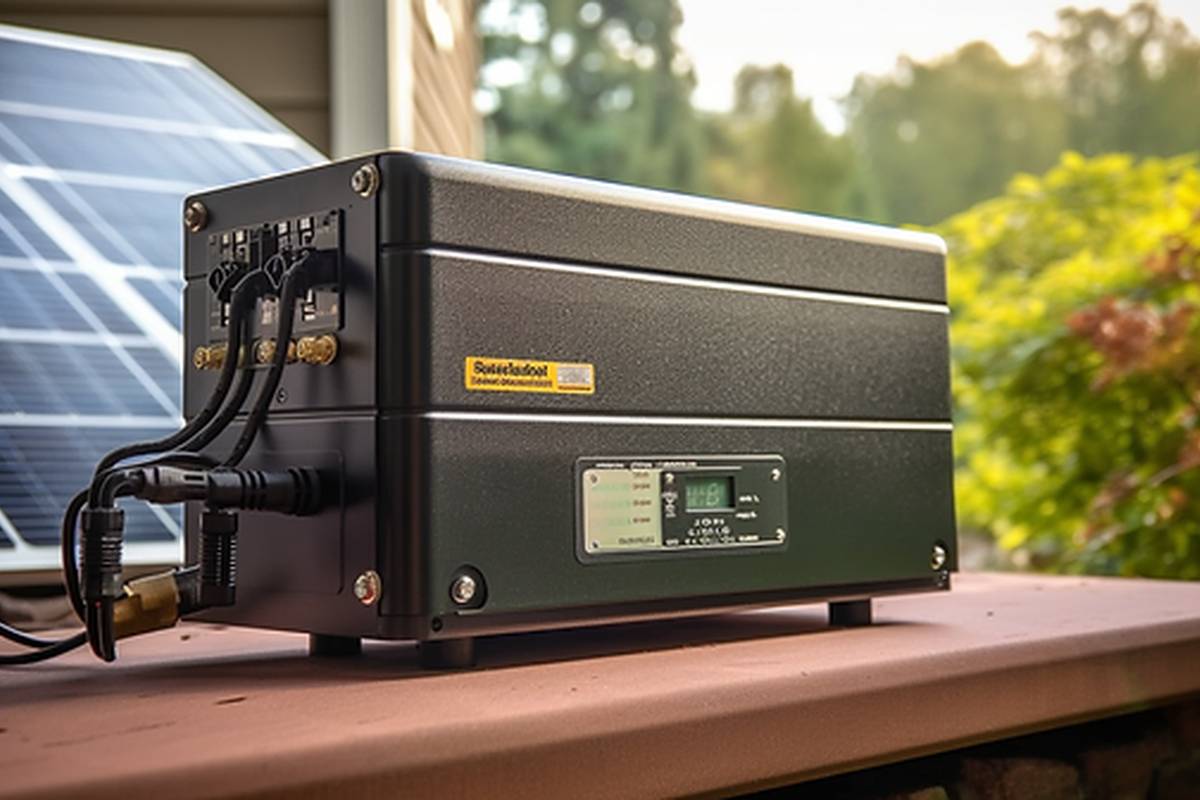
To meet his requirement, an inverter is required.