robert
The U.S. solar industry just posted record-breaking growth that makes going solar more accessible than ever. In Q2 2026 alone, the country added 11.4 gigawatts of solar capacity, a 45% jump from last year and 43% higher than the previous quarter. This surge pushed total operating solar capacity past the threshold to power more than 50 million American homes, and together with storage, solar now accounts for 70% of all new generating capacity installed in the first half of this year.
For homeowners considering solar, these numbers translate to real benefits. The explosive growth has intensified competition among installers, equipment manufacturers are scaling production to meet demand, and financing options continue to expand. If you’re still learning what solar is and whether it makes sense for your home, current market conditions are working in your favor.
Three key developments are shaping opportunities for residential solar buyers right now: federal tax credit stability, the maturing storage market driving down battery costs, and a surge in vetted local installers competing for your business. Understanding how these trends affect your timeline and budget can help you secure the best value while avoiding common pitfalls in a rapidly changing marketplace.
What Changed in 2026: Key Solar Market Developments
The U.S. solar market hit three significant milestones in 2026 that directly affect homeowners considering solar adoption. Operating solar capacity now powers over 50 million American homes, marking a historic expansion in clean energy infrastructure. The market added 11.4 GW in the second quarter alone, a 45% jump from the same period last year, while solar and storage together accounted for 70% of all new generating capacity during the first half of the year.
These changes represent more than industry statistics. They translate to increased installer capacity in most markets, more competitive pricing as the industry scales, and improved technology options for homeowners. The surge in solar-plus-storage installations has made battery backup systems more accessible, addressing one of the biggest concerns for potential solar adopters: what happens when the sun isn’t shining.
1. U.S. Solar Capacity Reaches Historic Milestone
The United States solar industry reached a defining moment in 2026: enough operating solar capacity now exists to power more than 50 million American homes. This milestone represents a fundamental shift in how America generates electricity, marking solar’s evolution from alternative energy source to mainstream power solution.
To understand the scale of this achievement, consider where the country stood just months earlier. At the end of 2025, the United States had approximately 209.5 gigawatts of installed solar capacity. The rapid additions throughout early 2026 pushed total capacity well beyond that baseline, creating enough generation potential to meet the daily electricity needs of roughly 40% of all U.S. households.
What makes this milestone meaningful goes beyond the raw numbers. The trajectory tells the story: U.S. solar capacity has grown dramatically in recent years, but 2026’s acceleration stands out. Each gigawatt of new capacity added to the grid translates to roughly 438,000 homes that could be powered by solar energy. The compound effect of multiple quarters of strong growth has fundamentally changed the electricity landscape.
For homeowners weighing whether to install solar panels, this expanded capacity creates several practical advantages. First, the massive scale of deployment has driven manufacturing efficiencies that continue pushing equipment costs downward. Second, the proliferation of installations means more experienced contractors operate in most markets, improving installation quality and competitive pricing. Third, grid operators have adapted infrastructure to accommodate solar power more seamlessly, reducing interconnection headaches.
The 50-million-home threshold also signals staying power. Solar installations represent long-term infrastructure investments, typically operating for 25 to 30 years. This installed base creates momentum that makes solar an enduring component of America’s energy future rather than a temporary experiment. Homeowners entering the market now join an established, mature industry with proven track records and stable supply chains.
2. Record-Breaking Growth in Q2 2026
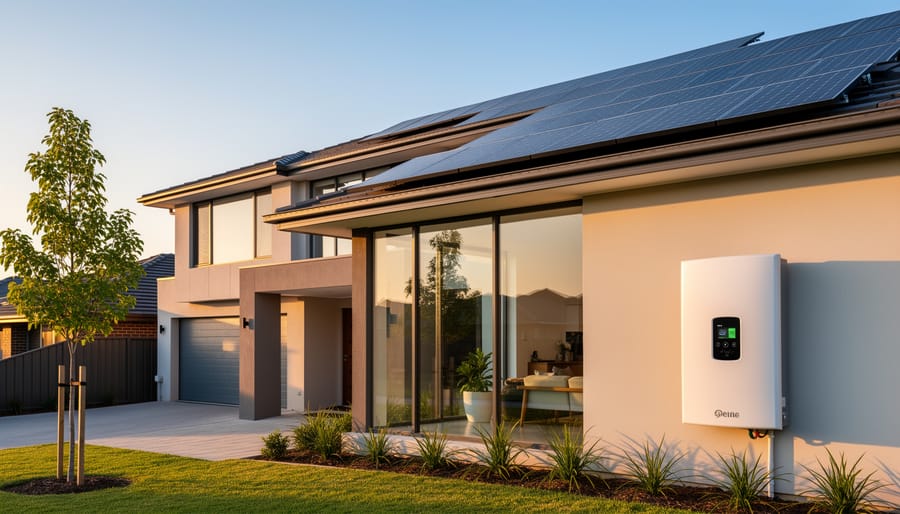
The second quarter of 2026 marked a turning point for the U.S. solar industry, with installations accelerating at a pace many analysts didn’t anticipate. The market added 11.4 gigawatts of solar capacity between April and June, enough to power roughly 2 million additional homes. These numbers represent more than abstract industry growth. They signal fundamental shifts in how quickly homeowners can access solar technology and what they’ll pay for it.
The growth figures tell a compelling story:
- 45% increase compared to Q2 2025, showing sustained year-over-year momentum in solar adoption
- 43% jump from Q1 2026, indicating seasonal acceleration and strong market confidence
- 11.4 GW added in three months, roughly equivalent to 30 million solar panels installed nationwide
- Fastest quarterly growth rate since federal incentives were last expanded, reflecting both policy support and market maturity
This acceleration stems from several converging factors. Manufacturing capacity has caught up with demand after supply chain constraints eased in late 2025. More installers entered the market, increasing competition. Panel efficiency improvements mean each installation generates more power from the same roof space, making solar viable for homes that previously didn’t qualify.
For homeowners, this rapid expansion creates tangible benefits. Increased installer competition has contributed to pricing in 2026 becoming more favorable than in previous years, with many regions seeing 8-12% cost reductions compared to early 2025. However, the surge in demand has created mixed effects on wait times. While more installers means more capacity overall, popular contractors in high-demand markets still book out 6-8 weeks for installations.
The quarter-over-quarter jump is particularly significant because it contradicts typical seasonal patterns. Solar installations usually slow slightly in Q1 before picking up in spring, but the Q2 surge exceeded normal seasonal variation. This suggests genuine market expansion rather than just seasonal fluctuation, giving homeowners confidence that solar infrastructure and expertise will continue improving throughout 2026.
3. Solar and Storage Dominate New U.S. Energy Capacity
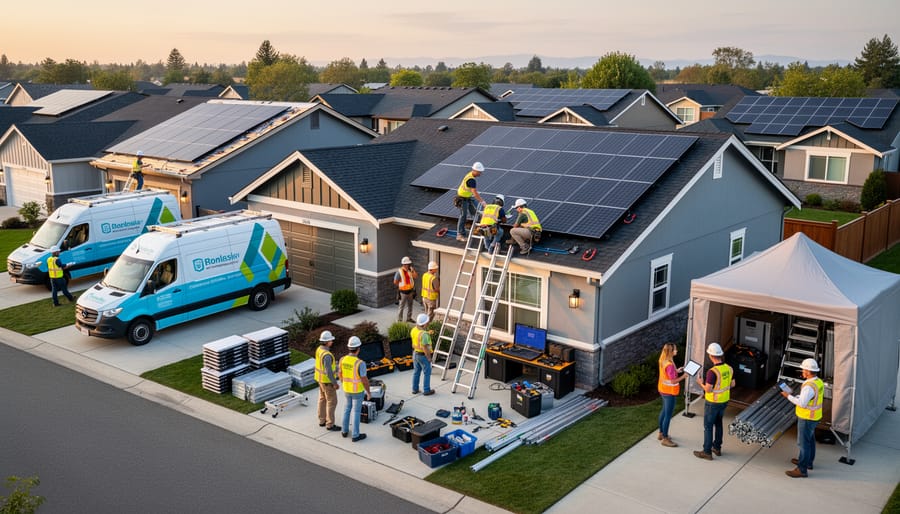
Solar and storage installations captured 70% of all new generating capacity added to the U.S. grid during the first half of 2026. This marks a fundamental shift in how America builds its energy infrastructure. Coal and natural gas, which once dominated new capacity additions, now account for less than a third of new projects. The transition reflects both improving economics and growing recognition that renewable energy paired with batteries can meet reliability demands once considered impossible without fossil fuels.
This dominance signals stronger grid stability rather than weakness. Battery storage solves solar’s intermittency problem by capturing excess daytime generation and releasing it during evening peak demand hours. Grid operators can now dispatch stored solar power exactly when needed, eliminating the reliability concerns that previously limited renewable deployment. The result is a more resilient system that maintains stable electricity delivery while reducing carbon emissions.
For homeowners, this pairing delivers three concrete benefits. First, solar-plus-storage systems provide backup power during outages, keeping essential appliances running when the grid fails. Second, batteries enable time-of-use arbitrage: you charge your battery with cheap solar electricity during the day and use that stored power during expensive evening rate periods, maximizing savings on top of reduced solar installation cost. Third, battery-equipped homes can participate in grid services programs where utilities pay for access to stored capacity during peak demand events.
The technology has matured considerably. Modern lithium-ion batteries last 10 to 15 years with minimal degradation, and installation has become routine for experienced contractors. While adding storage increases upfront investment, the combination offers protection against rate increases and grid instability that standalone solar cannot match. As utilities shift toward time-of-use pricing structures, storage transforms from luxury to practical necessity for many homeowners seeking maximum energy independence and cost control.
Why These Developments Matter for Homeowners

The rapid expansion of U.S. solar capacity isn’t just an industry milestone. It translates into tangible benefits for homeowners considering solar adoption right now.
When the market grows 45% year-over-year, as it did in Q2 2026, the resulting competition and scale work in your favor. More installers are entering the market and expanding their operations, which means you’ll find it easier to get multiple competitive quotes and compare offerings in your area. This increased installer capacity also shortens wait times that plagued the industry during previous growth spurts.
The surge in installations drives down equipment costs through volume purchasing. Panel manufacturers and inverter suppliers respond to higher demand by ramping up production, improving efficiency, and passing savings along the supply chain. Homeowners shopping for solar systems today benefit from better pricing than those who installed just 18 months ago, even accounting for inflation.
- Lower upfront costs from economies of scale in equipment manufacturing and installation
- Shorter installation timelines as more qualified installers enter the market
- Access to improved financing options designed for the growing residential solar segment
- Enhanced grid stability from the solar-plus-storage combinations now dominating new capacity
- Stronger home resale value as solar becomes standard rather than exceptional
Grid reliability improves as solar and storage reach 70% of new generating capacity. When your local utility adds solar farms with battery backup, you experience fewer outages and more stable rates. The pairing of solar with storage also makes residential systems more attractive because you can rely on stored power during grid disruptions or peak-rate periods.
Perhaps most significantly, solar-equipped homes now command premium resale prices in most markets. As solar capacity reaches the scale to power 50 million homes, buyers view panels as a valuable feature rather than an experimental addition. Your investment today protects you against rising energy costs while building equity in your property.
Current Federal and State Incentives in 2026
The federal solar Investment Tax Credit remains a cornerstone incentive in 2026, allowing homeowners to deduct a percentage of their solar installation costs from their federal taxes. While the specific credit percentage has evolved through recent legislation, this incentive continues to significantly reduce upfront costs for residential systems, making solar adoption more accessible as the industry reaches new capacity milestones.
State and local programs have adapted alongside the market’s rapid expansion. Many states have introduced or expanded their own rebate programs, performance-based incentives, and property tax exemptions to complement federal support. Some utilities offer additional incentives for solar-plus-storage systems, recognizing that pairing solar panels with battery storage helps stabilize the grid as renewable capacity grows.
The connection between increased solar capacity and incentive availability works both ways. As more homeowners install solar systems and capacity expands, some state programs adjust their funding allocations or eligibility criteria. This makes timing important, programs with limited funding may have waitlists or annual caps that fill quickly in high-demand markets.
Before moving forward with solar, weigh the pros and cons of available incentives against your specific situation. A qualified local installer can help you navigate the combination of federal credits, state rebates, and utility incentives that apply to your location, ensuring you maximize available savings while the current programs remain active.
What to Watch: Upcoming Trends and Considerations
The momentum behind 2026’s record growth suggests several areas worth your attention as a homeowner considering solar.
Capacity expansion and installer competition. With 11.4 GW added in just Q2 and 45% year-over-year growth, expect the installer market to remain competitive through year-end. More companies entering your area typically means better pricing and faster installation schedules, but it also raises the importance of vetting credentials carefully. Watch for established installers expanding their service territories rather than rushing to the newest entrant.
Storage technology and cost trends. Since solar-plus-storage accounted for 70% of new U.S. generating capacity in the first half of 2026, battery technology is advancing rapidly. Prices for home storage systems have historically dropped as deployment scales up. If you’re on the fence about adding batteries now, monitor quarterly pricing from major manufacturers, waiting six months might save you 10-15%, though that delays your energy independence.
Utility rate changes. As solar penetration grows in your region, your utility may adjust net metering policies or time-of-use rates. These shifts can significantly affect your payback period. Check your utility’s rate case calendar and any proposed tariff changes. Installing before a rate structure change often grandfathers you into more favorable terms.
Policy stability at federal and state levels. While current incentives remain strong, legislative sessions in 2027 could bring changes. Locking in today’s tax credits and state programs eliminates uncertainty.
Don’t wait for perfection. Today’s technology already delivers 20-year returns that beat most investment alternatives.
Frequently Asked Questions
The rapid growth in solar capacity has homeowners rethinking their timelines and questioning what these industry shifts mean for their specific situations. Here are answers to the most common questions about how 2026’s developments affect residential solar adoption.
How does increased solar capacity affect my installation timeline?
Higher industry capacity means more installers and equipment availability, which generally shortens wait times. However, the 45% year-over-year growth has created temporary regional bottlenecks, so timelines vary by location, most homeowners can expect installation within 4-8 weeks after signing contracts, compared to 8-12 weeks in previous years.
Will solar prices continue to drop in 2026?
Panel and equipment costs have declined steadily, but installation prices reflect a balance between lower hardware costs and increased labor demand. Competition among the growing installer base tends to keep pricing competitive, though dramatic drops are unlikely, focus instead on total value including warranties, efficiency ratings, and financing terms.
Is solar-plus-storage worth it for residential users?
Battery storage adds upfront cost but delivers real value if you face frequent outages, time-of-use electricity rates, or want energy independence. With 70% of new U.S. capacity pairing solar with storage, battery costs are dropping and incentive programs are expanding, making the combination increasingly practical for homeowners.
How do I find qualified local installers amid this market growth?
Start by checking installer certifications (NABCEP credentials are the gold standard), reading recent customer reviews, and requesting multiple quotes to compare system designs and pricing. Established local companies with verifiable track records tend to provide more reliable service than new entrants capitalizing on market growth.
These market developments create both opportunities and considerations. The expanded installer network gives you more options, but doing your homework remains essential. Request detailed proposals that break down equipment specs, warranties, expected production, and total costs. Ask installers how long they’ve operated in your area and whether they handle permits, inspections, and utility interconnection directly. The right installer will answer these questions clearly and provide references from recent local projects.
The solar industry’s 2026 growth represents more than statistics, it marks a fundamental shift in how Americans power their homes. With capacity now serving over 50 million households and quarterly installations jumping 45% year-over-year, solar has moved from alternative energy to mainstream solution. For homeowners, this expansion translates into better technology, more competitive pricing, and increased installer availability.
These developments create a strong case for exploring solar, but the best outcomes come from informed decisions. Compare quotes from multiple local installers to understand your options and pricing. Evaluate whether adding battery storage makes sense for your situation and local utility rates. Review current federal and state incentives that apply to your location, these can significantly reduce upfront costs.
The industry’s momentum isn’t slowing. As solar and storage continue dominating new U.S. generating capacity, homeowners who act now position themselves to lock in current incentives while benefiting from improved technology. Whether your priority is cutting monthly energy bills or reducing environmental impact, the market conditions favor making a well-researched move. Take the time to gather competitive quotes, ask detailed questions, and choose the solution that fits your specific needs and budget.