robert
The fastest way to cut summer cooling costs is to stack small changes in order: start with free habits like raising your thermostat a few degrees and blocking afternoon sun, then move to low-cost fixes like a fresh air conditioner filter and sealed air leaks, and finish with bigger upgrades such as efficient appliances or solar. Cooling is often the largest summer line item on a home energy bill, so even modest tweaks add up quickly. Every tip below can also shrink your carbon footprint, which is a nice bonus when your wallet is the main concern.
We chose these ten ideas by cost, effort, and payoff. Some take thirty seconds and cost nothing. Others need a professional, and that’s where connecting with a trusted local service provider helps you get quality work and accurate quotes. For the larger projects, government incentives can offset part of the price, so check which programs apply to your home before you buy. Details change, so confirm current offers with your local utility or energy office.
Start at number one and work down. Most homeowners see a real difference before they spend a dollar.
How We Chose These Summer Energy-Saving Tips
Not every energy-saving tip is worth your time, so we ranked each one by four things:
- Upfront cost: what it takes to get started, from nothing at all to a real investment.
- Savings potential: how much it can trim your cooling bill over a season.
- Ease of doing it yourself: whether an average homeowner can handle it without hiring help.
- Environmental impact: how much less electricity you pull from the grid.
The list builds in a simple order. You’ll start with free habits you can try this weekend, move on to low-cost fixes that pay for themselves over time, and finish with bigger investments for lasting savings.
One honest caveat: your results will vary. Home size, local climate, and your utility’s rates all change how much you actually save, so treat each tip as a starting point rather than a promise. A small apartment in a mild area won’t see the same drop as a large house in a hot, humid region.
You also don’t need any technical or solar background to use these tips. Every idea is explained in plain language, and you can pick the ones that fit your budget and comfort level.
Free and Low-Cost Habits That Pay Off Right Away
1. Raise Your Thermostat a Few Degrees
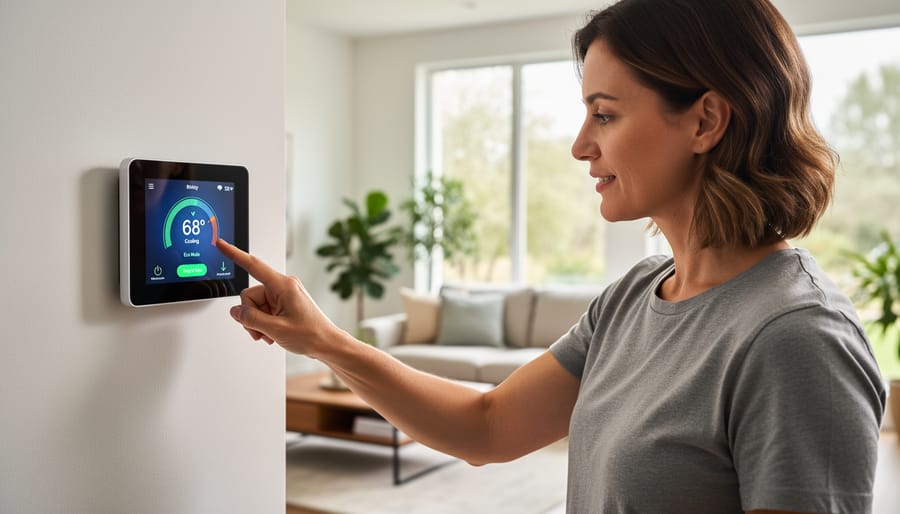
Your air conditioner works hardest when there’s a big gap between the temperature outside and the number on your thermostat. Shrink that gap, and the system runs less often. Even raising your setting by a few degrees while you’re home can trim your cooling use noticeably, and the savings add up over a long summer.
When nobody’s home, go bigger. There’s no reason to chill an empty house, so nudge the setting up several degrees before you leave for work or errands. Your home will still be comfortable when you return, especially if you drop it back down about half an hour before you arrive.
The cost-benefit math is hard to beat: it costs nothing, and it starts working the moment you change the setting.
If you’d rather not think about it, a programmable or smart thermostat can make these adjustments for you on a schedule.
2. Close Blinds and Curtains During the Hottest Hours
Sunlight pouring through a window works a lot like a greenhouse. The glass lets the heat in, and the warm air has a hard time getting back out, so your air conditioner ends up working overtime to fight the sun.
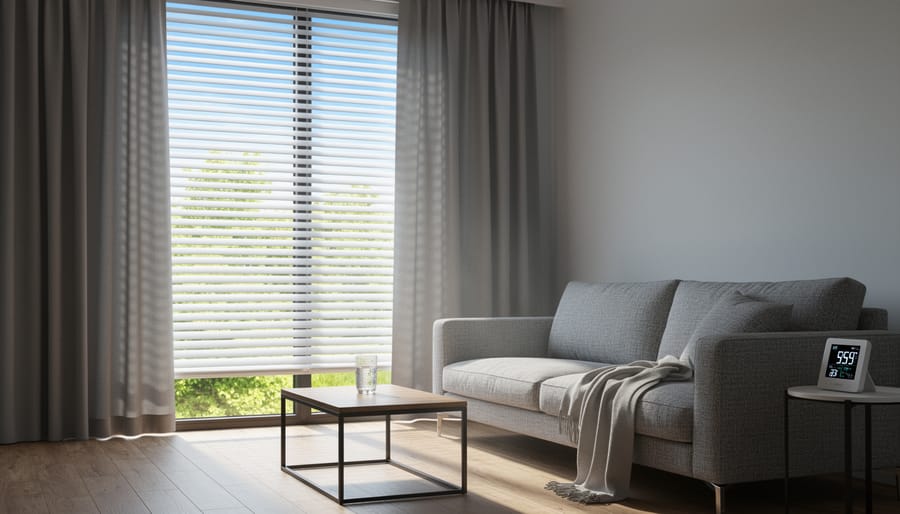
The fix costs nothing. Close your blinds, curtains, or shades during the hottest hours, roughly late morning through late afternoon. Light-colored or thick, lined curtains help even more, since they bounce back some of that heat.
Start with the windows that face south and west. They take in the strongest, longest stretches of sun, especially in the afternoon. If closing every window feels like too much, cover those first and you’ll notice the biggest difference in how cool your rooms stay.
3. Use Ceiling Fans Smartly
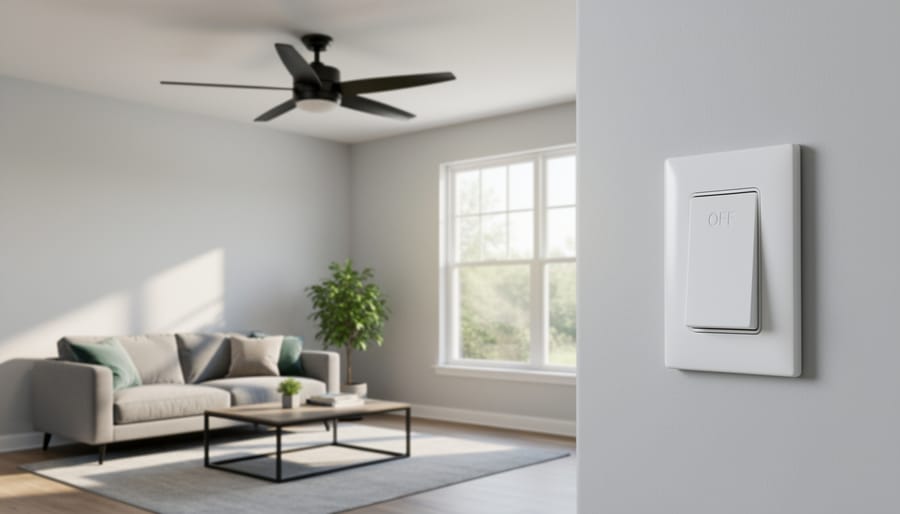
A ceiling fan doesn’t actually lower the temperature of a room. It moves air across your skin, which helps sweat evaporate and makes you feel cooler. That means a fan running in an empty room is just wasting electricity, so switch it off when you leave.
Check the direction, too. In summer, most fans should spin counterclockwise when you look up at them, which pushes air straight down and creates a breeze. Many fans have a small switch on the motor housing to change direction.
Here’s where the savings come in. With a fan running, you can usually nudge your thermostat up a few degrees and stay just as comfortable. Your air conditioner runs less, and your bill goes down.
4. Shift Heat-Producing Chores to Early Morning or Evening
Your kitchen and laundry area generate more heat than you might think. A dishwasher’s drying cycle, a dryer, and a hot oven all dump warmth into the house just when your air conditioner is working hardest. Run these appliances early in the morning or after the sun goes down, when the house has a chance to shed that extra heat.
Better yet, skip the oven on hot days. A microwave, slow cooker, or outdoor grill cooks dinner without turning your kitchen into a sauna. Even air-drying the dishes instead of using the heated dry setting helps.
Also, ask your utility whether it offers time-of-use rates. Some charge less for electricity during off-peak hours, so shifting chores to evening or early morning can trim both the heat and the cost.
5. Unplug Devices and Switch to LED Bulbs
Many devices keep drawing power even when they look switched off. TVs, game consoles, phone chargers, and coffee makers sit in standby mode, waiting for a remote signal or keeping a clock lit. It’s called standby power, and it adds up quietly all year.
Take a quick walk through your home and spot the culprits. Plug entertainment centers and home office gear into power strips, then flip the strip off when you’re done for the day. Unplug chargers you aren’t using.
Next, look at your bulbs. Old incandescent bulbs turn most of their energy into heat, which your air conditioner then has to fight. LEDs use a fraction of the electricity and stay much cooler to the touch. They cost only a few dollars each now, and they last for years, so swapping the bulbs in your most-used rooms first pays you back fast.
Home Upgrades That Keep Your House Cooler All Season
6. Give Your Air Conditioner a Tune-Up and Fresh Filter
A dirty filter makes your air conditioner work harder to pull air through, which drives up your bill and wears the system out faster. During heavy use, check the filter monthly and swap it every one to three months. Pleated filters can last a bit longer, but a homes with pets or dust often need a fresh one sooner.
Take a minute to clear leaves, grass clippings, and weeds from around the outdoor unit, and keep about two feet of open space on every side so air can move freely.
A yearly professional checkup catches small problems, like low refrigerant or dirty coils, before they turn into expensive repairs. If you’re also thinking about longer-term savings, it helps to weigh the solar pros and cons look at typical solar installation cost and read the latest solar incentives update.
7. Seal Air Leaks and Add Attic Insulation
Gaps around windows, doors, and the attic hatch let cool air slip out and hot air creep in, so your air conditioner works harder than it should. A quick way to find leaks is to hold a lit incense stick near the edges on a breezy day and watch where the smoke wavers. Weatherstripping and caulk are the budget-friendly fix. A few tubes and a roll or two of weatherstripping usually cost less than a nice dinner out, and most people can install them in an afternoon.
Next, look up. Heat pours through the roof all day, and thin or settled attic insulation lets it flow straight into your living space. Adding insulation slows that heat down, which keeps rooms cooler and gives your AC a break. It costs more than caulk, but it tends to pay back through lower bills year after year.
Some efficiency upgrades may qualify for federal or state incentives. Programs change often, so confirm current details and eligibility before you buy.
8. Add Window Film, Shades, or Exterior Shading
Blocking the sun before it hits the glass is far more effective than trying to cool air that’s already warm. Reflective window film is a thin layer you apply to the inside of a window, and it bounces much of the sun’s heat back outside. Solar screens work similarly but mount on the outside of the window frame, and awnings shade the glass entirely. Shade trees planted on the south and west sides add natural cooling and, once grown, cost nothing to maintain.
Less cooling demand also means less electricity burned, which trims your carbon footprint along with your bill.
Renters can stick with removable film, tension-rod shades, or window-mounted screens that leave no marks. Owners have more freedom: awnings, permanent screens, and trees are lasting investments that keep paying off every summer.
9. Upgrade to Energy-Efficient Appliances and a Smart Thermostat
An ENERGY STAR label means a product meets efficiency standards set by the U.S. government, so it does the same job while using less electricity. For air conditioners, refrigerators, and washers, that usually translates into noticeably lower bills year after year.
Replacing a working appliance isn’t always smart. Start by checking the age. If your AC is 12 to 15 years old, needs frequent repairs, or struggles on hot days, a new high-efficiency unit can pay for itself over time. If it’s only a few years old and runs fine, the savings from swapping it rarely cover the price tag.
Think of it as upfront cost versus years of smaller bills. A pricier efficient model might cost more today, but you’ll feel the difference every month through the whole cooling season. Pair it with a smart thermostat, which is inexpensive and adjusts temperatures automatically, and you avoid cooling an empty house.
Before you buy, look up current federal tax credits and state or utility rebates for efficient equipment. These programs change often, so confirm eligibility and amounts first.
10. Power Your Cooling with Solar for Long-Term Savings
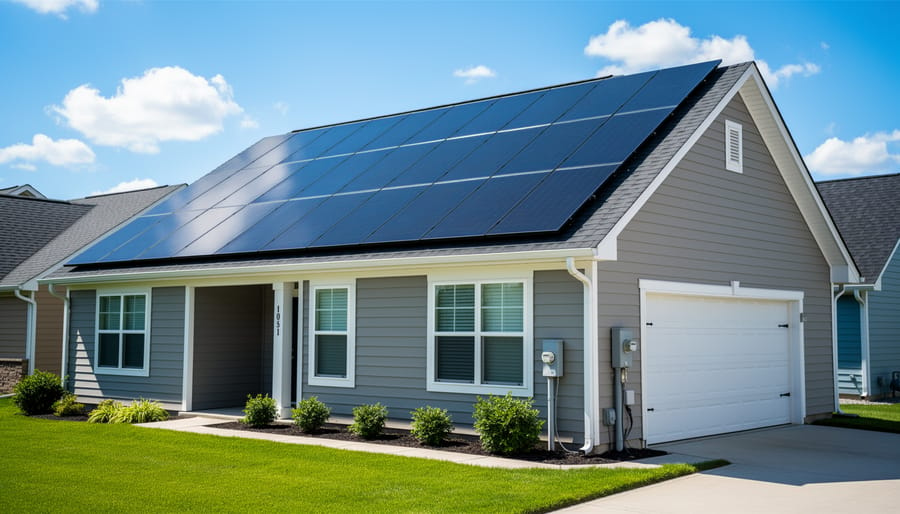
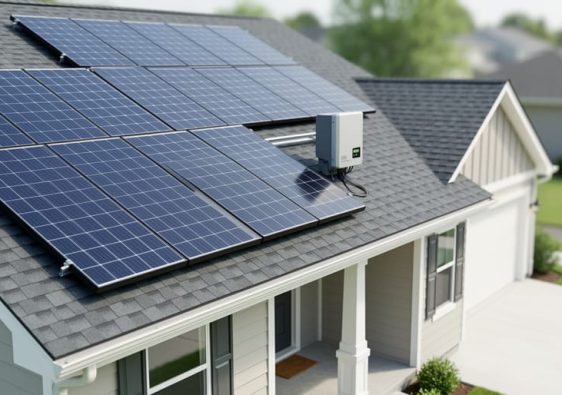
Summer is when solar panels often work hardest. Long, bright days mean more electricity from your roof, and that lines up with the hours your air conditioner runs the most. If you’ve already sealed leaks, added shading, and tuned up your AC, solar is the biggest long-term step you can take next.
Order matters here. A home that wastes less power needs fewer panels, so cutting waste first usually means a smaller, cheaper system. If you’re new to this and want a plain-language primer on what solar is you don’t need any background to get started.
The cost-benefit picture is straightforward. You pay upfront (or finance), then your panels cover part or all of your electricity use, which can shrink or even erase those summer cooling bills over time. How fast you break even depends on your roof, local sunshine, and utility rates. You also get a cleaner energy supply, since every kilowatt-hour from your roof is one less drawn from the grid.
Incentives can improve the math. Federal programs, state rebates, and local utility offers have all existed for home solar, but they change often and have eligibility rules. Confirm what’s currently available and whether you qualify before you sign anything.
Ready to see what it would cost for your home? Request competitive quotes from a few local solar providers. It’s free to ask, and comparing offers is the easiest way to find a fair price.
Common Questions About Saving Energy in Summer
Most readers land on the same handful of questions, so here are quick, practical answers before you start changing settings around the house.
What is the best thermostat setting for summer?
Pick the warmest setting you can stay comfortable with while you’re home, then raise it a few more degrees when the house is empty. Pairing that with a ceiling fan lets you feel cool at a higher number.
Does closing vents in unused rooms save energy?
Usually not much. Most central systems are designed to move a set amount of air, so shutting vents can create pressure problems and make the system work harder. Closing doors and blinds in empty rooms is a safer move.
Is it cheaper to leave the AC running all day?
In most homes, no. Letting the temperature drift up while you’re away and bringing it back down later generally uses less energy than holding it cool all day, and a programmable thermostat can handle the timing.
Does solar still make sense if my summer bills are high?
Often it does, because high summer bills mean there’s more electricity to offset, and panels tend to produce plenty when the sun is strong. Trim waste first so you’re not paying to power a leaky, inefficient house.
As for how much you can realistically save, it depends on your home’s size, your climate, and your utility rates. Free habits like adjusting the thermostat and closing blinds cost nothing and show up on the next bill, while upgrades take longer to pay back. If you’re weighing solar against those other upgrades, our solar cost guide walks through what to expect. Start with the easy wins, and let the results guide how far you go.
Your Next Step Toward a Lower Summer Bill
Cutting your summer bill doesn’t have to happen all at once. Start with the free habits, like nudging the thermostat up, closing blinds on sun-facing windows, and running heat-producing chores at cooler times of day. You can put those to work this weekend. Once they’re routine, pick the upgrades that fit your budget, whether that’s a fresh AC filter and tune-up, sealing air leaks, or adding shade for your windows.
Solar is the long-term payoff. A home that wastes less power needs a smaller system, and summer is when panels often produce the most electricity. Before you commit to anything, check the current federal and state incentives, since programs change. Then ask a few local solar providers for installation quotes so you can compare your options side by side. Every small step lowers your bill and your footprint, so pick one and get started today.